

No Content Yet? How Coneberry Writes Your Article or Press Release
Plenty of businesses have a story and no time to write it. You know the launch, the milestone or the expertise you want to share, but turning it into a clean article or a properly formatted press release is another matter. If that sounds familiar, there is an easier route than staring at a blank page.
On Coneberry, a place to get articles and press releases published on real news and business websites, you can ask the team to write the content for you. It works like a lightweight press release writing service built into your order: you answer a short questionnaire, the team drafts the piece, and nothing goes live until you approve it. Everything runs in your free dashboard at dashboard.coneberry.com.
How does the writing option work?
The flow has three parts. First you choose publications or a PR package and place an order. That costs nothing upfront. Then the order page asks Do you have the content? and offers two answers. If you pick No, please write it for me, a questionnaire opens. Finally, the team writes a draft and shares it in the order’s Messages chat for you to review.
Also worth a look: How to Send Your Article or Press Release for Publishing: A Google Docs Guide and Indian News Networks for Press Releases: PTI, ANI, Super 100 and Super 200 Explained.
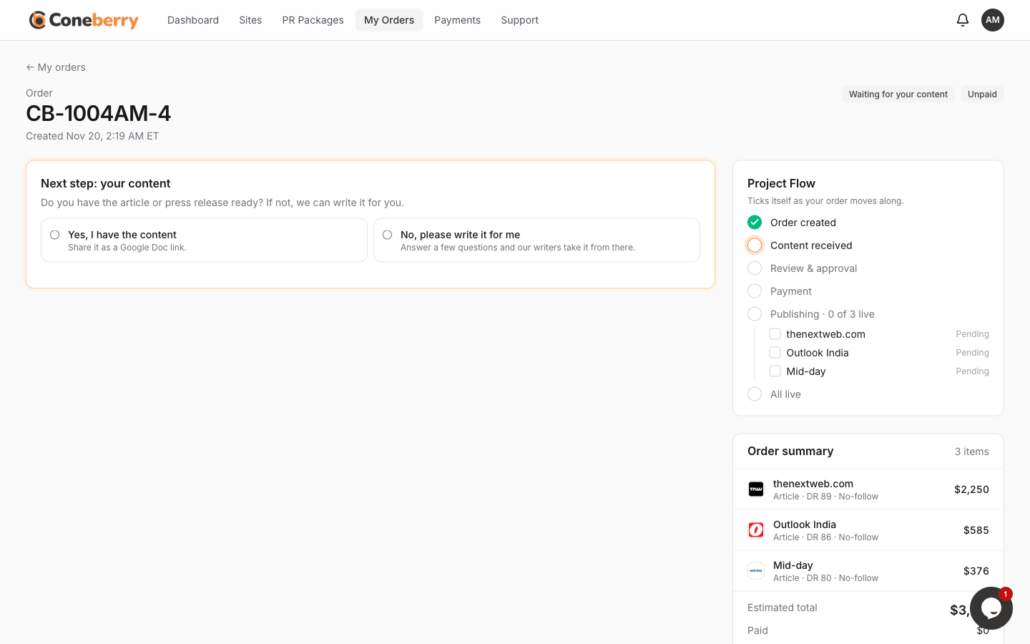
Choose No, please write it for me when you have no content yet.
You are never locked in. If you decide to write it yourself later, share a Google Doc instead, as described in Sending your content.
What goes into the questionnaire?
The questions are short, but your answers set the quality of the draft. Expect to cover:
- What the content is about: the news, topic or message.
- Special points: details that must be included, or angles you prefer.
- Anything else we should know: tone, things to avoid, context for the writer.
- Your company: what you do, who you serve and what makes you credible.
- Your website and social links: including any links and keywords you want in the article, with the keyword to link from and a note about where it should point.
If your order includes a press release, the form asks for more, because the format needs it: two quotes, an About Us paragraph (the short company description at the end) and a media contact. For articles those fields are left out.

The questionnaire collects the facts the writer needs.
How do you get a strong first draft?
A writer can only work with what you give them. These habits make the first draft close to final:
- Lead with the real news. What happened, what is new, why it matters today?
- Give specifics. Names, dates, places and figures you can back up. Do not send claims you cannot support, because publications and readers notice.
- Describe the reader. An article for investors reads differently from one for local customers.
- Write usable quotes. For a release, quotes should sound like a person speaking and come from someone who is happy to be named.
- Name the link you want. Tell us which page to link to and the words to link from.
To see what a finished piece should look like, read how to write a press release that gets published or how to write a guest post that publications accept.
What happens after you submit?
Your answers appear in the order chat, so you can see exactly what the writer received. The team then shares a draft in the same chat. You can read it, ask for changes in plain language and approve it when you are happy. The Project Flow checklist on the order page tracks each step, from Order created and Content received to Review & approval, Payment and Publishing.
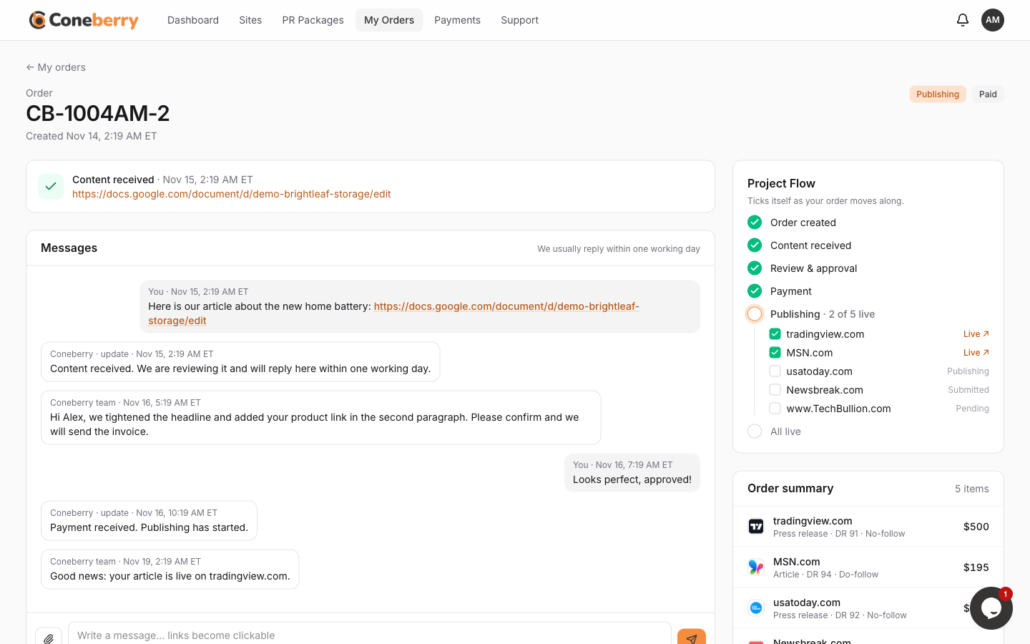
The draft and your feedback live in the order's Messages chat.
Nothing is published without your approval, and the team also checks the content against the publication’s rules. You pay in full after the content is reviewed and before publication, using the invoice on the order.
What should you keep in mind?
- Only provide facts and images you have the right to use.
- Regulated topics, such as finance, crypto, health, supplements and gambling, are only published on sites that accept them.
- Some publications label content as sponsored or partner content. Coneberry never asks them to hide that.
- Publication, indexing on Google and ranking changes are never guaranteed by a draft alone.
Who is the writing option best for?
It suits founders and small teams who know their business well but have no writer on staff. It also suits agencies and marketers who are juggling several launches and want a first draft they can react to instead of starting from nothing. If you prefer to write it yourself because you have a strict brand voice or a legal review process, the Google Doc route fits better.
It is also a good way to learn the format. Reading a draft built from your own facts shows you how a press release is structured: a headline, a lead paragraph that carries the news, supporting detail, quotes, an About Us paragraph and a media contact. Next time you may well write it yourself.
How do you give feedback on a draft?
Reply in the Messages chat in plain language. Specific notes work best: “Move the funding figure into the first paragraph”, “Replace the second quote with one from our CTO”, “Link the word pricing to our pricing page”. The team updates the draft and shares it again until you are happy to approve.
Frequently asked questions
Can I see the draft before it is published?
Yes. The draft is shared in your order chat for approval, and nothing is published until you approve.
How long does writing take?
Timing depends on the order and the publication. Questions about timing are best asked in the order’s Messages, and our turnaround guide explains what to expect.
Can I include my own links?
Yes. Add the links and the keywords to link from in the questionnaire. Each site or package has rules on how many links are allowed.
What if I want to write it myself after all?
Share a Google Doc on the order page at any point before the content is sent to publications.
See where your story could appear
Browse the publications and prices on the Sites page, or look at PR packages for press releases. Browsing is free and needs no account.
More step-by-step help is in the Coneberry Help Center.


