

Indian News Networks for Press Releases: PTI, ANI, Super 100 and Super 200 Explained

India is one of the largest news audiences in the world, and a brand that wants to be known there needs more than an English-language post on a global site. It needs to appear where Indian readers actually look. This guide explains how press release distribution in India works through the Indian news networks offered on Coneberry: PTI, ANI, Super 100 and Super 200.
Coneberry is a place to get articles and press releases published on real news and business websites, so your brand is seen on trusted publications, found when people search for you and included in AI answers from Google AI, ChatGPT and Copilot. Clients browse 5,000+ publications and order from a free dashboard at dashboard.coneberry.com. For India, the quickest route is a PR package: one release, one order and one price, distributed across a network.
Why use an Indian news network?
Reputation is local. A founder in Mumbai, a manufacturer in Gujarat or a foreign brand opening an Indian office is judged by what Indian publications say about it. Customers, partners, investors and journalists in India search in English and in local languages, and they trust the names they already know.
Also worth a look: Yahoo Finance Press Release Distribution: How Finance News Packages Work and PR Packages Explained: How One Press Release Reaches a Whole News Network.
An Indian network delivers that in one step. Instead of pitching outlets one at a time, you send one release and it is distributed across a group of Indian news sites. That builds visibility where it matters, and the links are a welcome bonus for search, but the main value is being seen on credible publications.
What are PTI, ANI, Super 100 and Super 200?
The four packages are separate products you can find on the PR packages page:
- PTI: a package built around the PTI network. PTI is one of the best-known news agencies in India.
- ANI: a package built around the ANI network, another widely recognised agency.
- Super 100 and Super 200: wider networks that add more Indian news sites. They include publications such as The Week, The Print and The Tribune, together with hundreds of other Indian news sites.
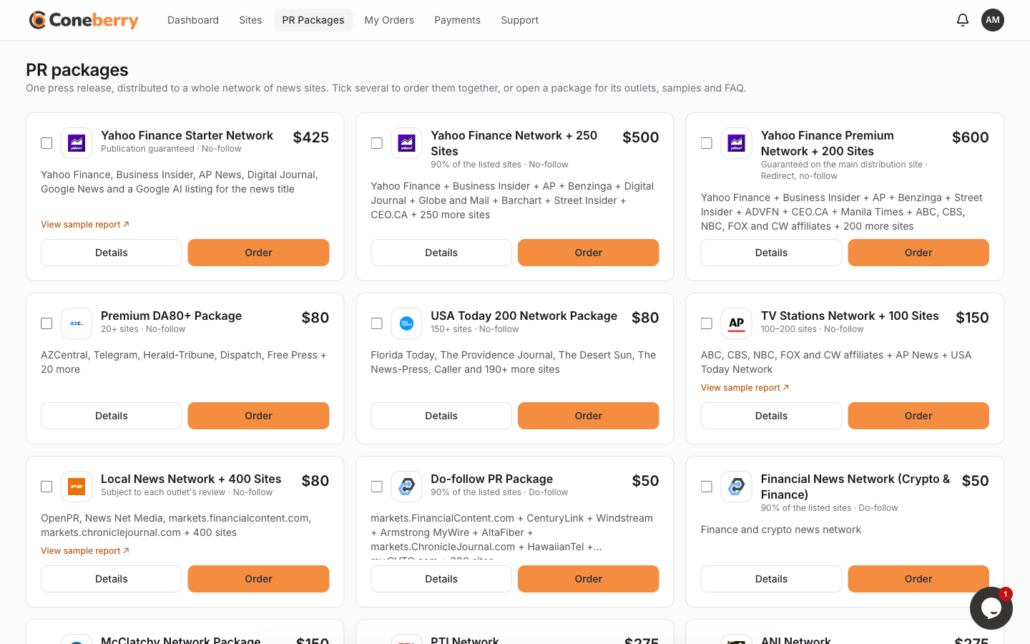
Indian news networks sit alongside the other PR packages.
The exact outlets, what is guaranteed and the limits differ by package, so open Details on each. Prices are shown on every package card, which makes comparing them simple.
Which package fits your goal?
There is no single best choice, but these rules of thumb help:
- You want recognised agency names. PTI or ANI put your release on networks known to Indian editors and readers.
- You want broad coverage. Super 100 or Super 200 spread the release across many more Indian news sites.
- You are testing the market. Start with one package and read the report, then add another for the next announcement.
- You want several at once. Tick more than one package and press Order all. See ordering several sites or packages in one order.
What can you see before you buy?
Press Details to read about outlets, guarantees, link type, word count, images, links, guidelines and the FAQ. Press View sample report to open a real distribution report from an earlier press release, with live links. Outlets can vary from one release to the next, so the report shows the real shape of results rather than a promise.

The Details view lists outlets, limits and guidelines for each package.
How do you order an Indian news package?
- Open PR packages and press Order on the package you choose.
- Check the summary, tick the Terms box and press Place order. Placing an order costs nothing upfront.
- Send your press release as a Google Doc, or ask Coneberry to write it. See sending your content.
- Our team reviews it, usually within one working day, and you approve any preview.
- You pay in full and publishing begins. Live links are posted on your order.
How do you write a release for Indian audiences?
- Open with the news. Put what happened, who is involved and why it matters in the first paragraph.
- Make the India link clear. If the story is global, say what it means for India: a new office, a local launch, a partnership or Indian customers.
- Use local detail. City, state and rupee figures are clearer than generic phrases when they are accurate.
- Add real quotes. Two quotes from named people, an About Us paragraph and a media contact are standard.
- Stay within the limits. Words, images and links are set per package.
Our guide how to write a press release that gets published goes into more detail.
What should you know about topics and labels?
Regulated topics such as finance, crypto, health, supplements and gambling are only published by outlets that accept them, and Indian outlets have their own rules, so read the package guidelines. Publications may label a release as a press release, sponsored or partner content. Coneberry never asks them to hide that. Metrics and outlet lists come from publishers and third-party tools and can change. Indexing on Google and ranking improvements are never guaranteed.
Timing and planning
Plan an Indian release around your own calendar: product launches, festivals that drive buying, financial results, events and conferences. Send the content early, because review, approval and payment come before distribution, and the networks publish at their own pace. Our turnaround guide explains the steps.
Frequently asked questions
Do I need to be based in India?
No. Any brand with news of interest to an Indian audience can use these packages, as long as the content follows the guidelines.
Can I choose which outlets publish my release?
Packages distribute across a network. If you want to choose specific sites, browse the individual publications on the Sites page.
Will I receive a report?
Live links are posted on your order, and packages with a distribution report include it when publishing is done.
What if an outlet declines my release?
You receive a replacement of equal or greater value, or a full refund for that site.
Take a look
Browse the Indian networks and every other package on the PR packages page, or explore individual publications on the Sites page. Browsing is free and needs no account.
More step-by-step help is in the Coneberry Help Center.


